Three numbers, every morning
Most watches and rings now report three recovery numbers. Here's what they are.
- HRV (heart rate variability): the small variation in time between heartbeats. It's very personal: one person's normal can be double another's, so comparing with friends isn't useful.
- Resting heart rate: your heart rate when fully at rest, usually measured overnight.
- Sleep stages and duration: how long you slept and roughly how that time split between light, deep and REM sleep.
Why one morning means little
A single low HRV or a poor night happens to everyone. Alcohol, a late meal, travel, stress or a hard session the day before can all shift these numbers for a day or two. Wearables also estimate sleep stages, so treat the exact minutes as a guide.
Look at your own baseline
The more useful question is: how does this week compare with your normal? A few things people watch for:
- a gradual shift in resting heart rate over several weeks;
- HRV trending away from your usual range;
- how sleep lines up with training, travel or routine changes.
If something stays off or you feel unwell, that's worth raising with a health professional.
Getting cleaner data
Your numbers are only as consistent as the way they're collected. A few simple habits help:
- Wear the same device most nights, as different devices measure differently.
- Keep it snug. A loose watch or ring can miss readings.
- Give it time. Most devices need a couple of weeks to learn your baseline.
- Note the outliers. A late night, alcohol or travel explains a lot of odd mornings, so a quick note saves guessing later.
With a few weeks of steady data, your trends start to mean something.
Where the app comes in
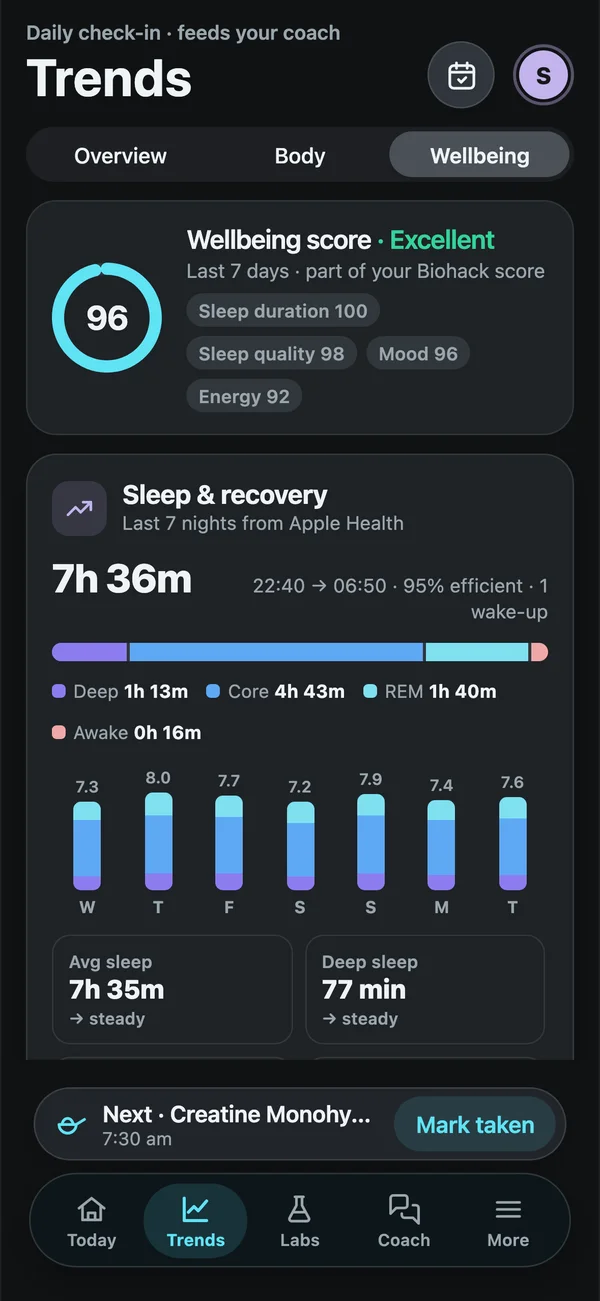
Biohack Tracker syncs sleep, HRV, resting heart rate and more from Apple Health or Health Connect, and puts them next to everything else you log: training, supplements, protocols and blood tests. Seeing them together shows patterns you'd miss in separate apps, and the coach can talk you through your own trends.
